

How to Choose the Right Off-Road Jack Without Overcomplicating It.
Let’s cut the fluff. You are looking for a heavy-duty hydraulic floor jack, and looking at all the choices can feel totally overwhelming. I completely understand! It is confusing. Let’s establish the basic math first:
1.5 tons = 3,000 lbs
2 tons = 4,000 lbs
3 tons = 6,000 lbs.
Boom. Math done.
But wait! There is way more to this than just slapping the biggest jack you can find under a heavy rig. Let's get down to business and figure out exactly what you need.
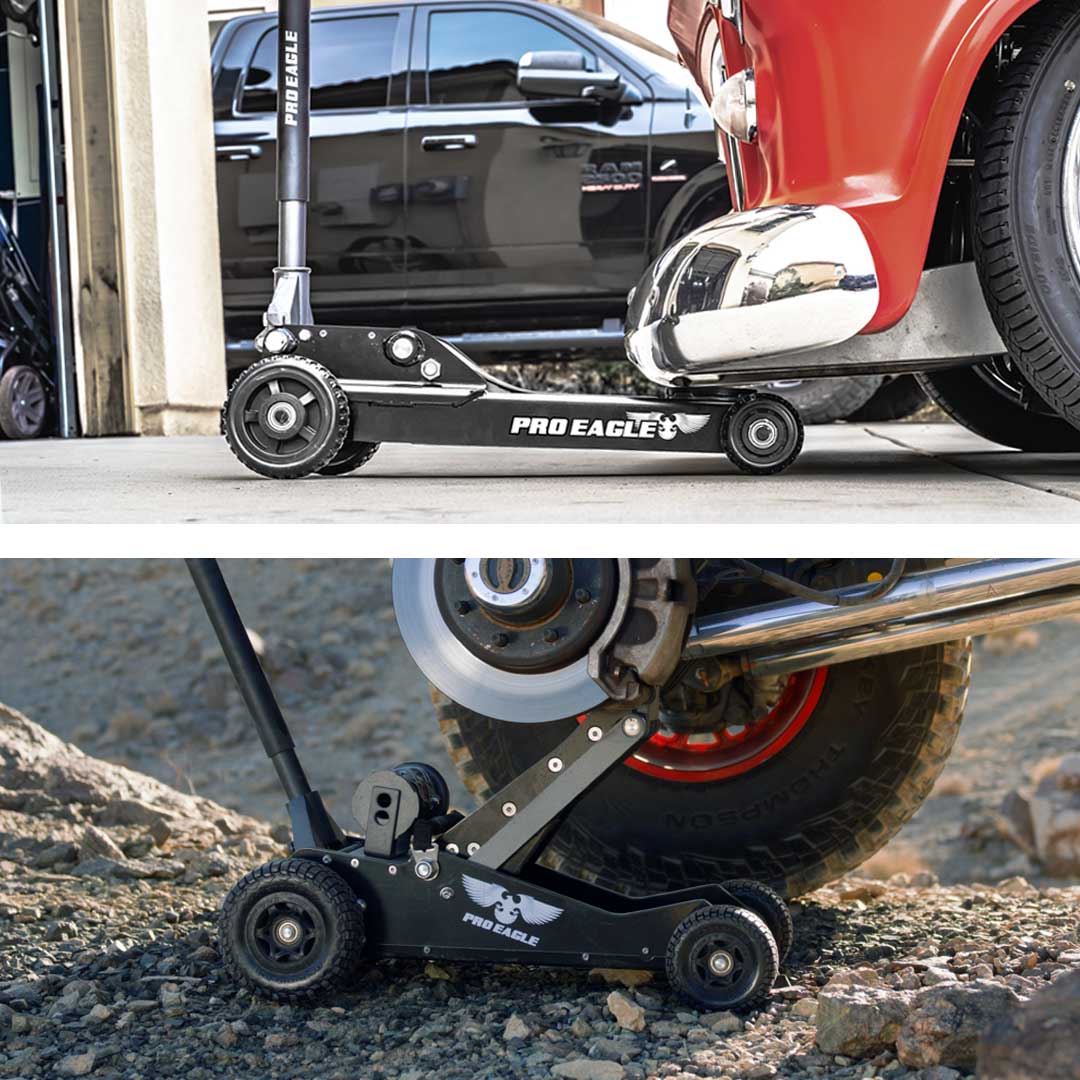
THE GARAGE VS. THE DIRT: WHAT ARE YOU ACTUALLY DOING WITH IT?
Vehicle weight matters, but frankly, too many people obsess over the capacity ratio and completely ignore the physical reality of hauling a massive chunk of metal around. Here is the brutal truth: if you are throwing this in your rig for weekend off-roading, the physical weight of the jack matters!
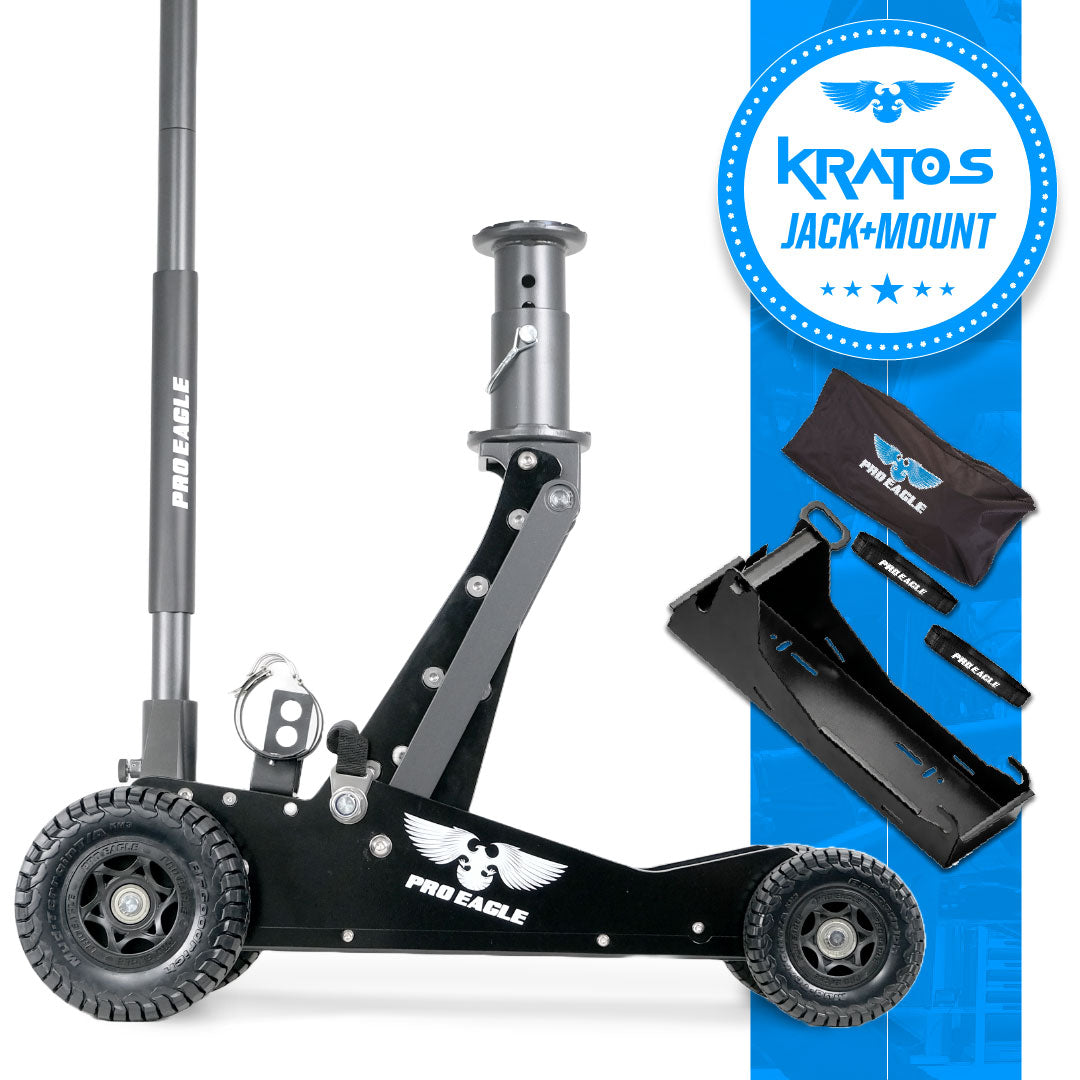
Our 3-ton Kratos weighs 68 lbs, and the 3-ton Abrams is 77 lbs. That is absolutely fantastic if it stays parked on your shop floor. But if you are taking it on occasional adventures or multiple times a month, do you really want to heave 70+ pounds in and out of a truck bed in the dirt? Probably not. If your vehicle doesn't strictly require that massive lift capacity, don't overbuy on tonnage just to flex. Save your back!
If you don't need the maximum lifting power, choosing a lighter option
can make a world of difference. We offer more portable solutions that
are much easier to handle on the trail: the 2-ton Beast weighs 55 lbs and the 1.5-ton Talon weighs 38 lbs.
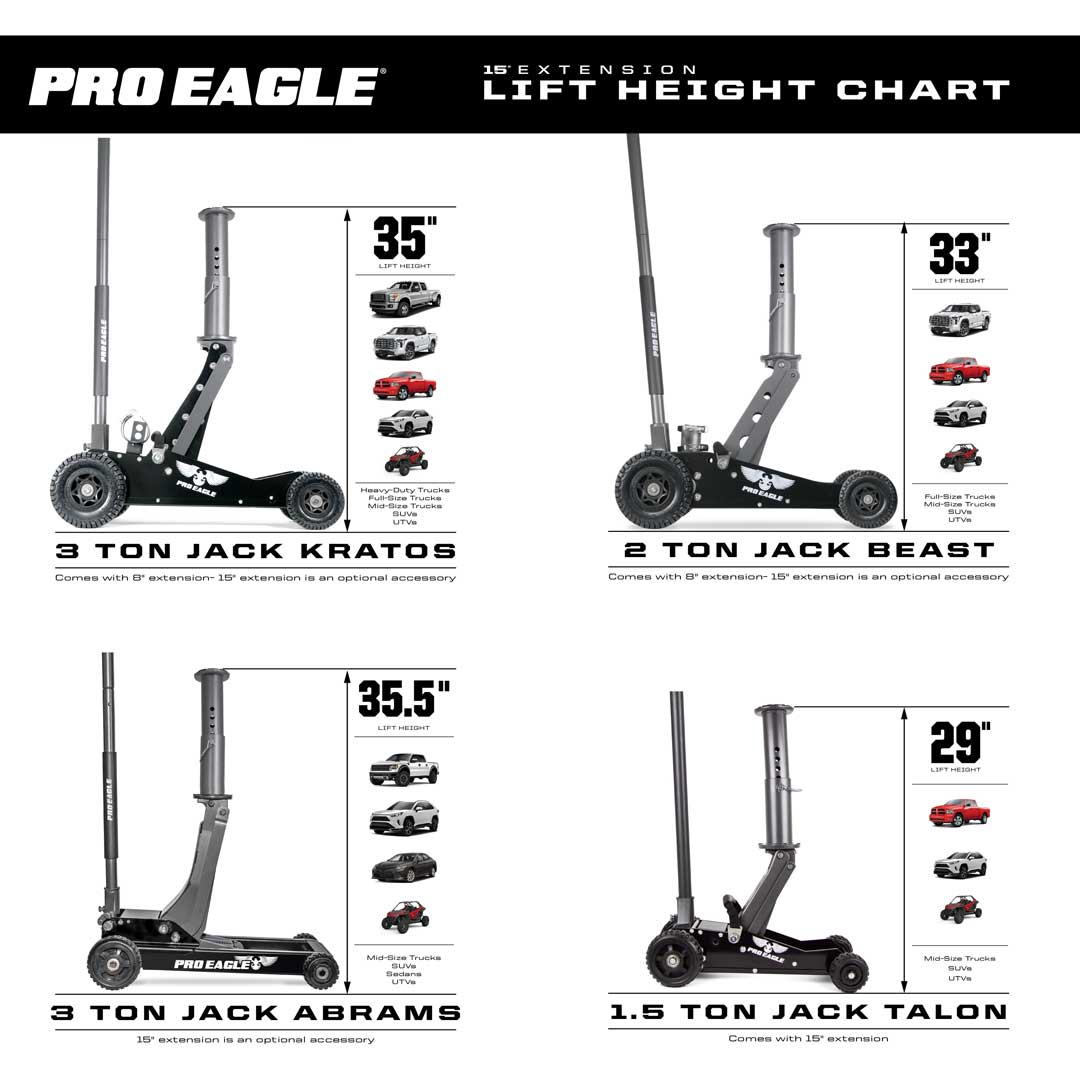
LIFT POINTS VS. WHEEL TRAVEL: THE HEIGHT EQUATION
Here is a concept that gets butchered all the time: lift points and wheel travel. Just because your Jeep rocks 40” tires and 15” of travel does NOT mean you need a high-lift jack capable of reaching the moon. It’s a Jeep. It has straight axles front and rear. Lift right under the axle housing, and you only need a jack that pushes 12” to 17”. Simple, direct, and safe.
However, if you are lifting a sand buggy, a lifted truck, or a UTV from the frame to let the suspension fully droop, you need all the lift height you can get. The new Polaris Pro R and Can-Am Mav R UTVs need a jack capable of hitting 28” of lift. Our 3-ton Kratos nails that right out of the box with zero extras needed. You can also easily hit that height with our 1.5-ton Talon, 2-ton Beast, or 3-ton Abrams when paired with our massive 15" extension.
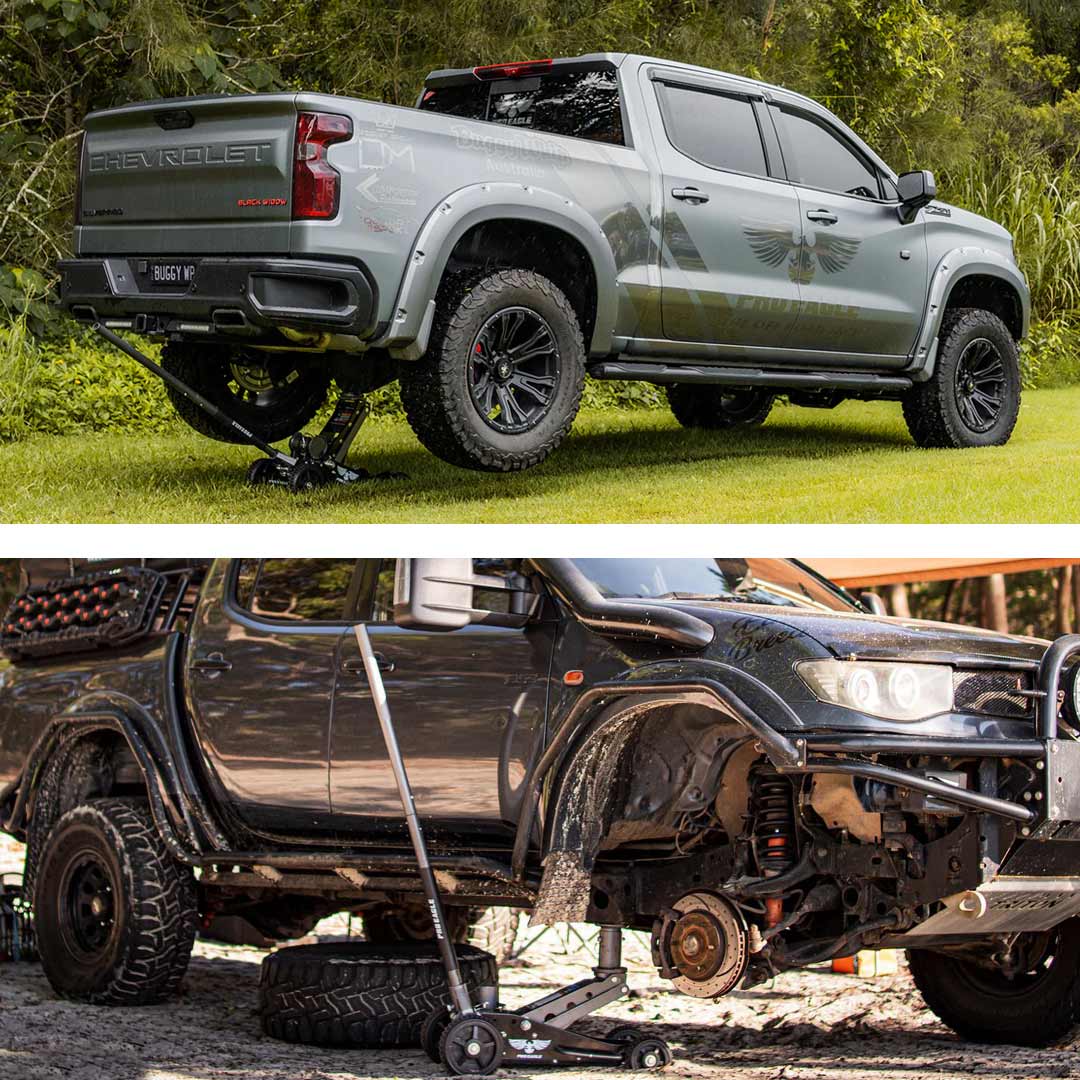
THE GREAT WEIGHT SPLIT DEBATE (LET'S RUFFLE SOME FEATHERS)
Now for a strong opinion that constantly causes fights on the internet: "If your truck weighs 7,000 lbs, you MUST buy a 7,000 lb jack."
Nonsense. Total nonsense.
You are lifting one end or one corner, you are not bench-pressing the entire truck! Generally, the weight split of most trucks is 65% on the front axle and 35% on the rear. Take a 7,000 lb Ford F-150 Raptor. The front axle handles about 4,550 lbs. If you lift from the factory point directly behind the front tire, you are lifting half of that—about 2,275 lbs.
Our 1.5-ton Talon Jack lifts 3,000 lbs easily. So yes, any of our off-road jacks can safely lift that Raptor. This is exactly why we highly recommend the 2-ton OG or the 2-ton Beast for Raptors and other pickups. It gives you a fantastic safety margin, incredible lifting power, and remains lightweight enough to handle easily.
The Bottom Line
Do this exact math for your own car or lifted truck. Factor in your payload, whether you pull a trailer, and realistically how often you take the jack on the trail. And for the love of everything holy, secure your gear! We make custom vehicle mounts for every single jack we sell. The absolute last thing you want is a loose jack acting like a wrecking ball in the back of your rig. Lock it down.
PRO EAGLE JACK LINE


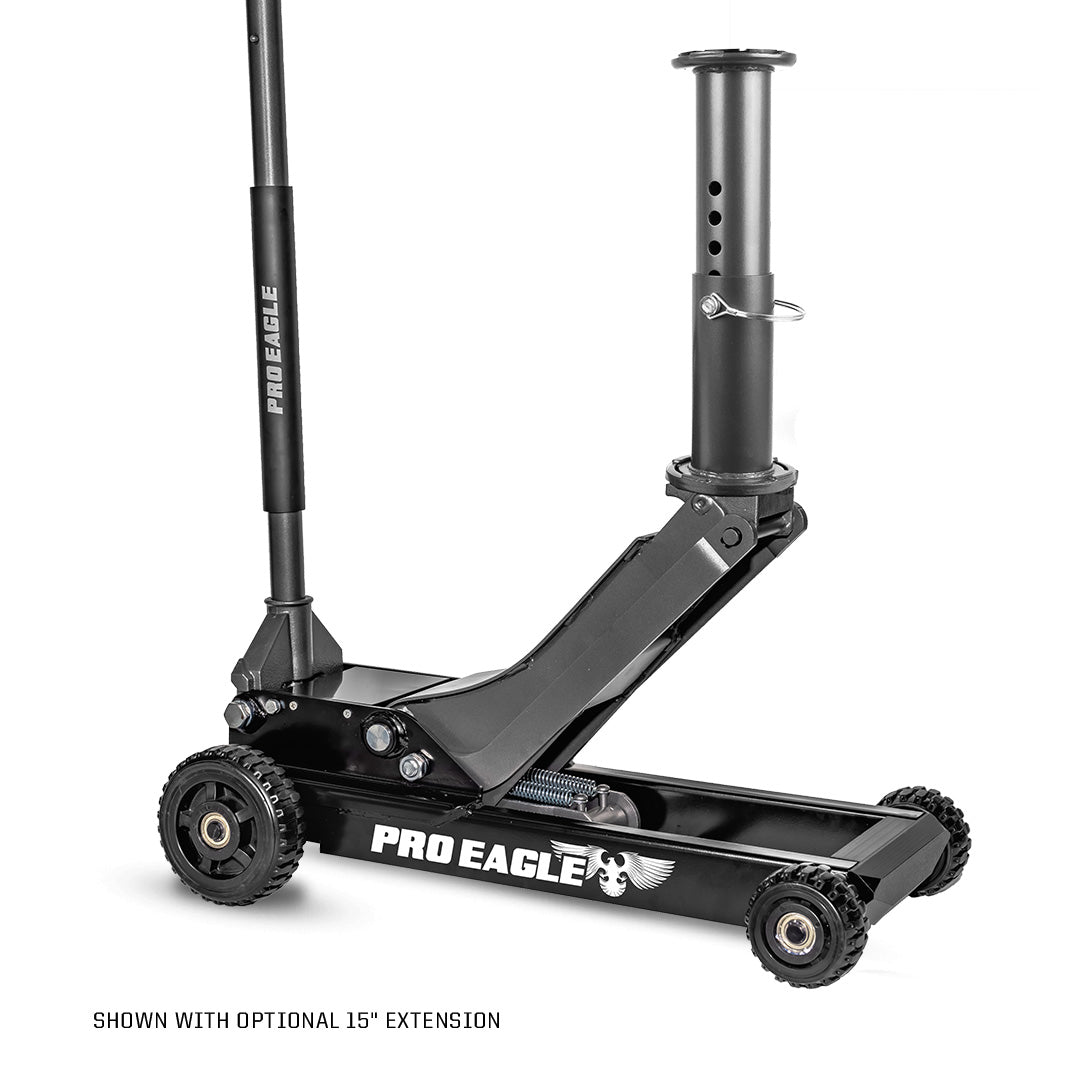




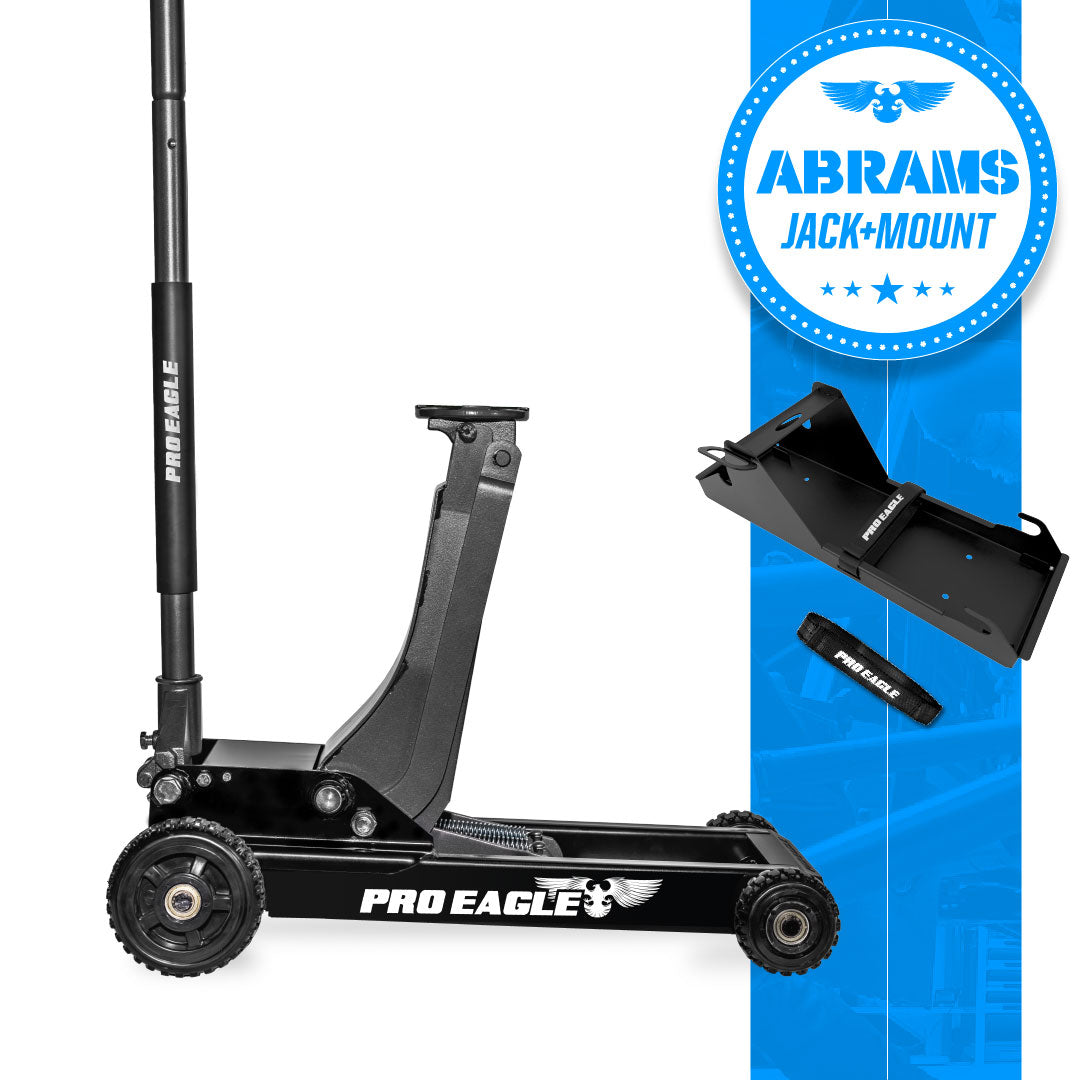
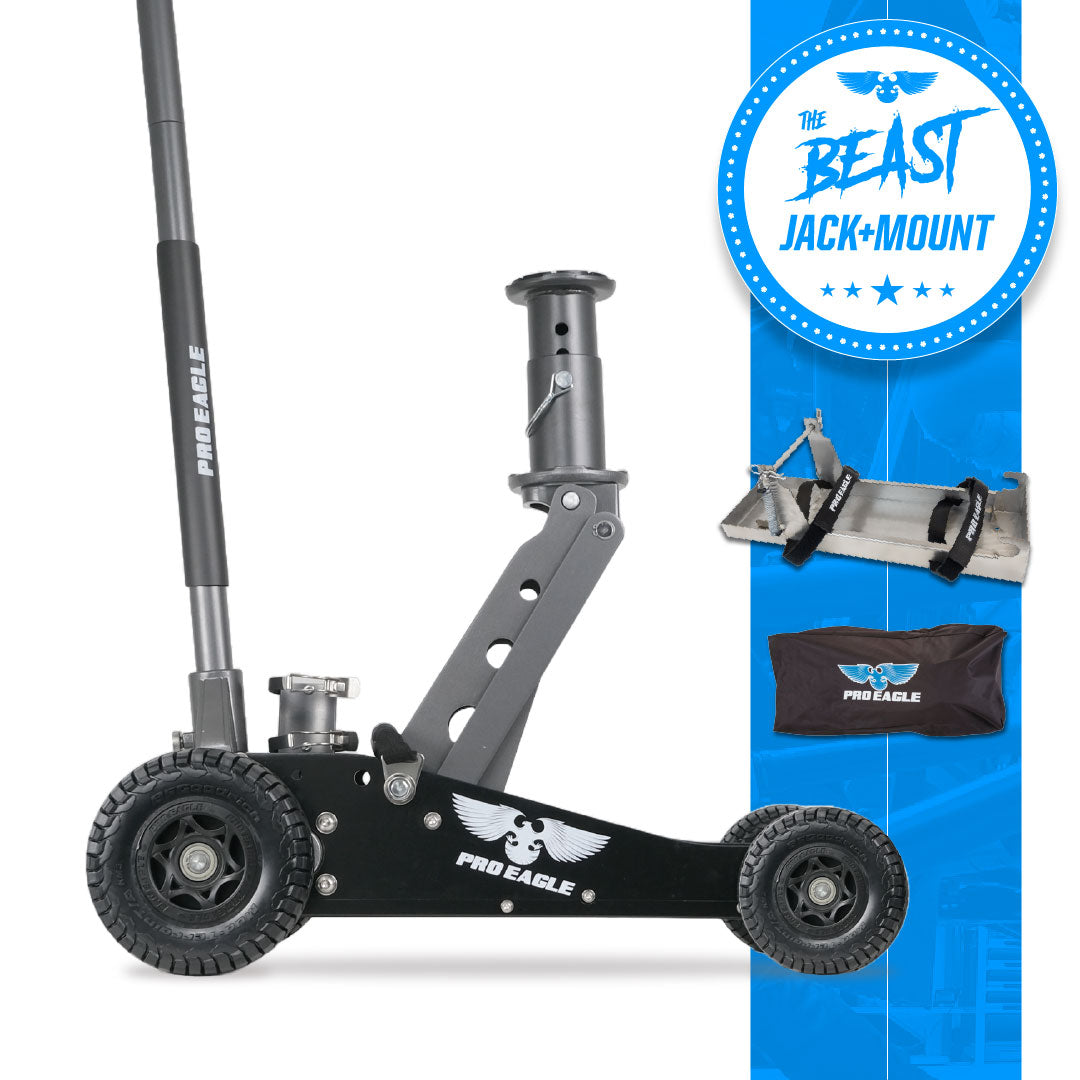
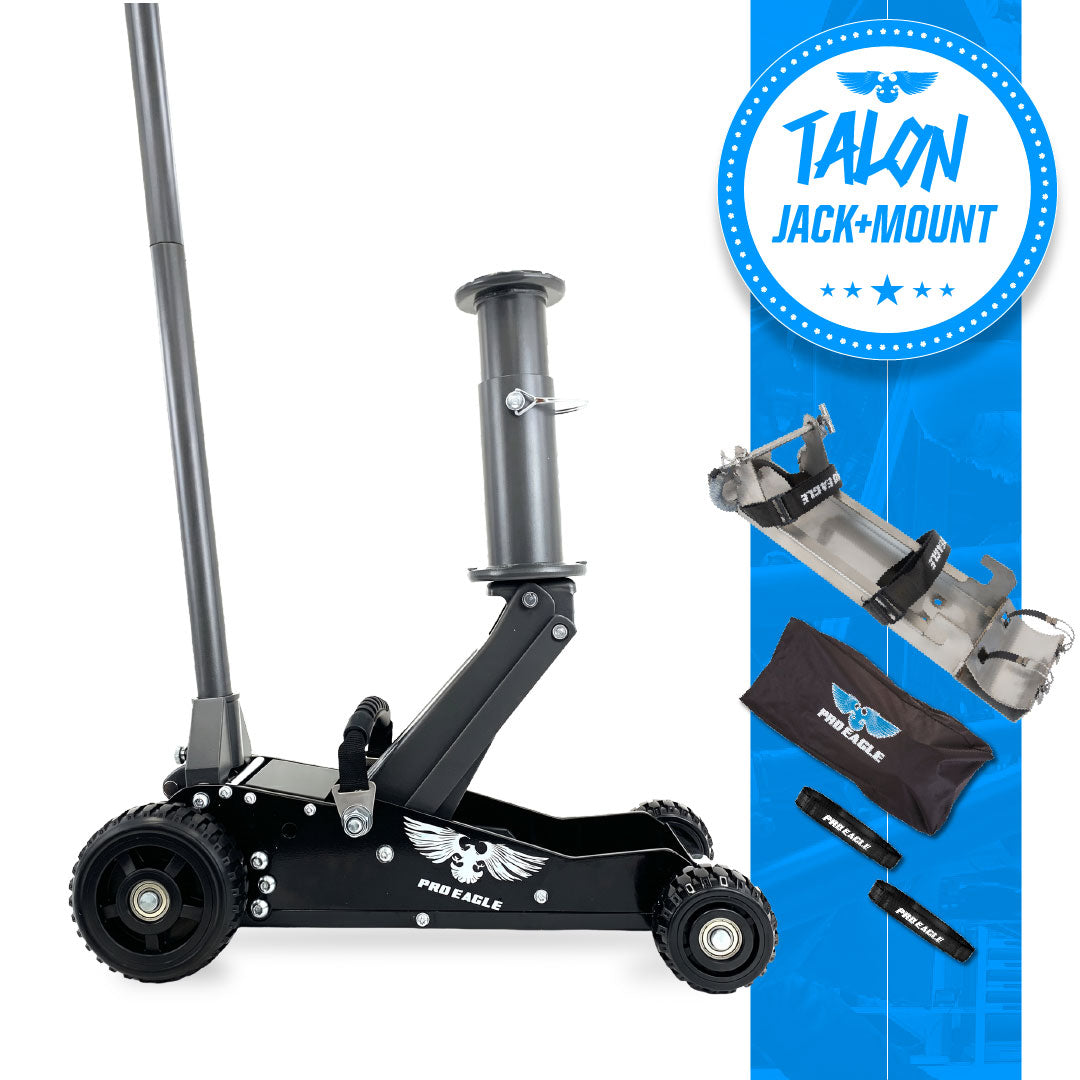


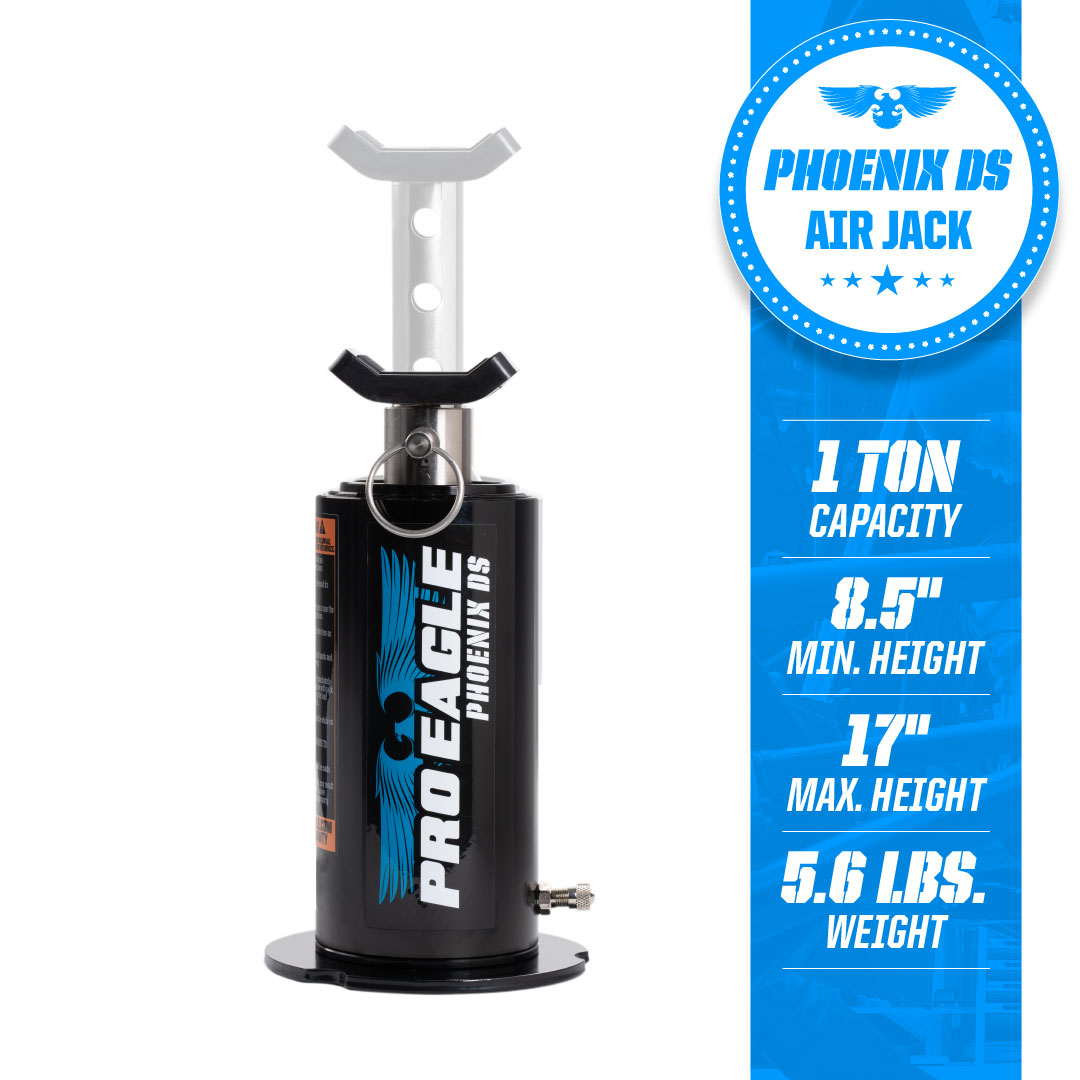
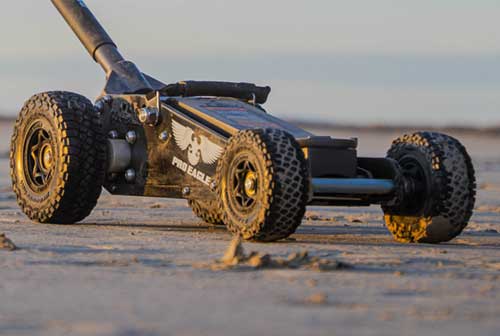
If your jack has been supporting heavy rigs through seasons of rocks, silt, and shop projects, your wheels have taken a beating. Sand, rocks, and hard surfaces naturally wear down bearings and trea...

The Definitive Guide to Vehicle Lift Points: Where to Safely Place Your Jack
Let's get one thing straight right out of the gate: guessing where to lift a 6,000-pound vehicle is a terrible idea. Between modern unibody construction, massive suspension travel on lifted trucks,...
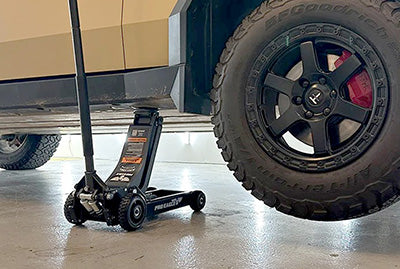
Protecting the lift point and proper use of extensions
Protecting the lift point and proper use of extensions One major advantage in the design of our lift pad and extension connection point is how easy and quicky the extension or adapter can be attach...